
For students
A serious research pathway for students who want to contribute.
Judd Research is built for trainees who want to grow within a cross-institutional network of dedicated peers and doctors.
Student experience
Structured enough to be serious, personal enough to matter.
Judd Research accepts highly-motivated students and pairs them with a peer-led team and physician researcher.
Our students receive 1-on-1 peer mentorship and attend lab meetings with their PI i.
Though there are ample opportunities for collaboration, we primarily encourage project ownership and first-author publications.
- Who should apply
- Premedical and medical students benefit most from this opportunity, though all students are encouraged to apply.
- How teams work
- A senior peer mentor acts as lab lead and checks in weekly to ensure students are well supported. At monthly lab meetings, the team further develops their projects with a physician researcher.
- What success looks like
- We value team collaboration that advances the field and the careers of everyone involved. Our students use each others' strengths to complete projects that they couldn't do alone.
- Long-term participation
- While not a requirement, our program is designed to benefit undergraduates through residents. Remote work allows our students to engage in impactful, multi-year projects.
Admissions snapshot
Our inaugural class makes one thing clear: different backgrounds, same values.
The 2025-2026 cohort snapshot below shows what students we accepted, how hard they work, and how service-oriented they truly are.
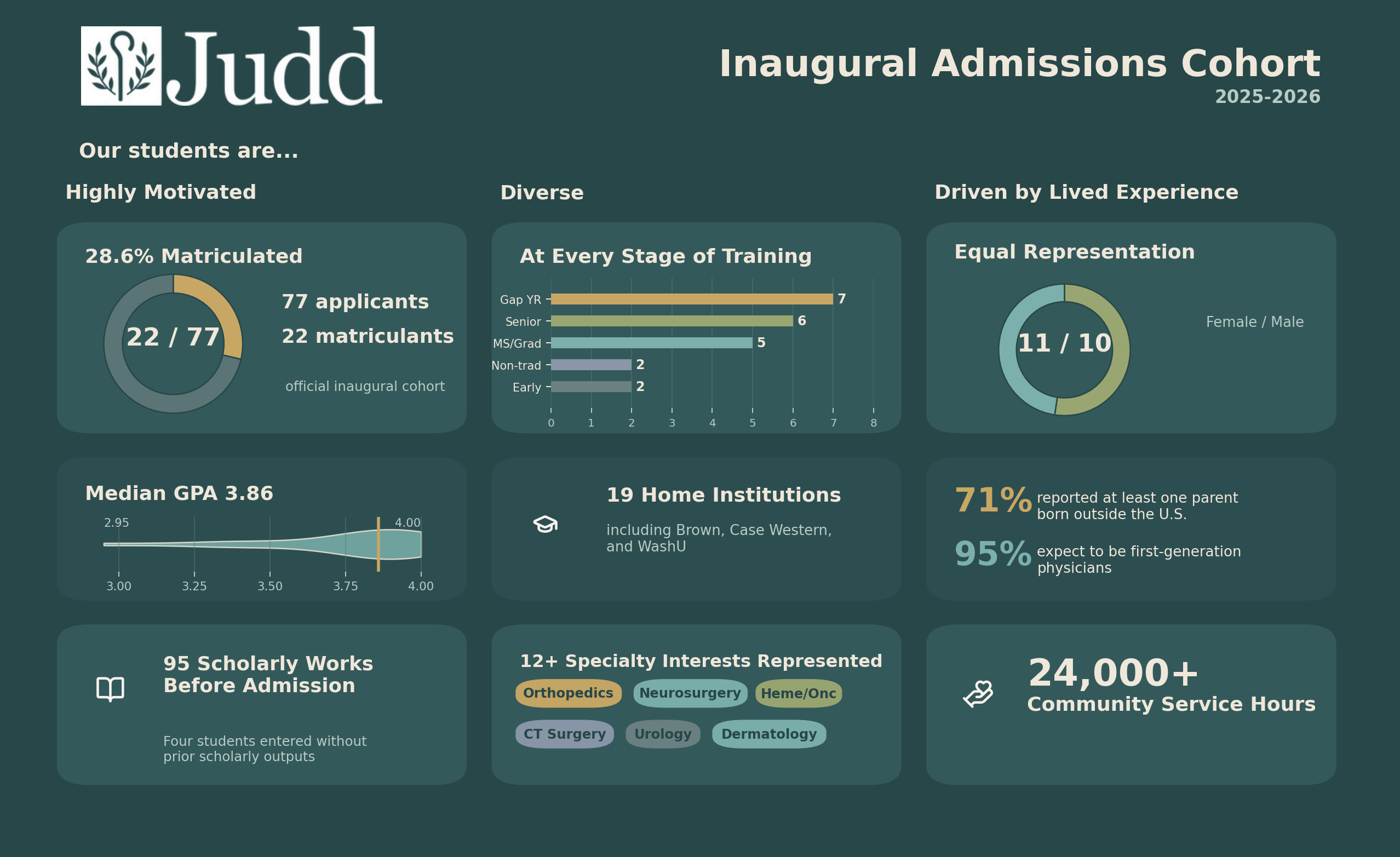
Judd Research students had a median of 1,000 service hours before joining the program. We didn't ask until after admissions; but we could hear their kindness during interviews.
What helps
The strongest predictor of matching into neurosurgery residency is relationships, not publications.
Students do best here when they're ready to build those relationships. That takes time, patience, and maturity. Don't worry; we're working on that too.
- You are ready to communicate consistently and revise thoughtfully.
- You want real project ownership rather than passive observation.
- You care about service, scholarship, and the long arc of professional development.